Sportbike Art
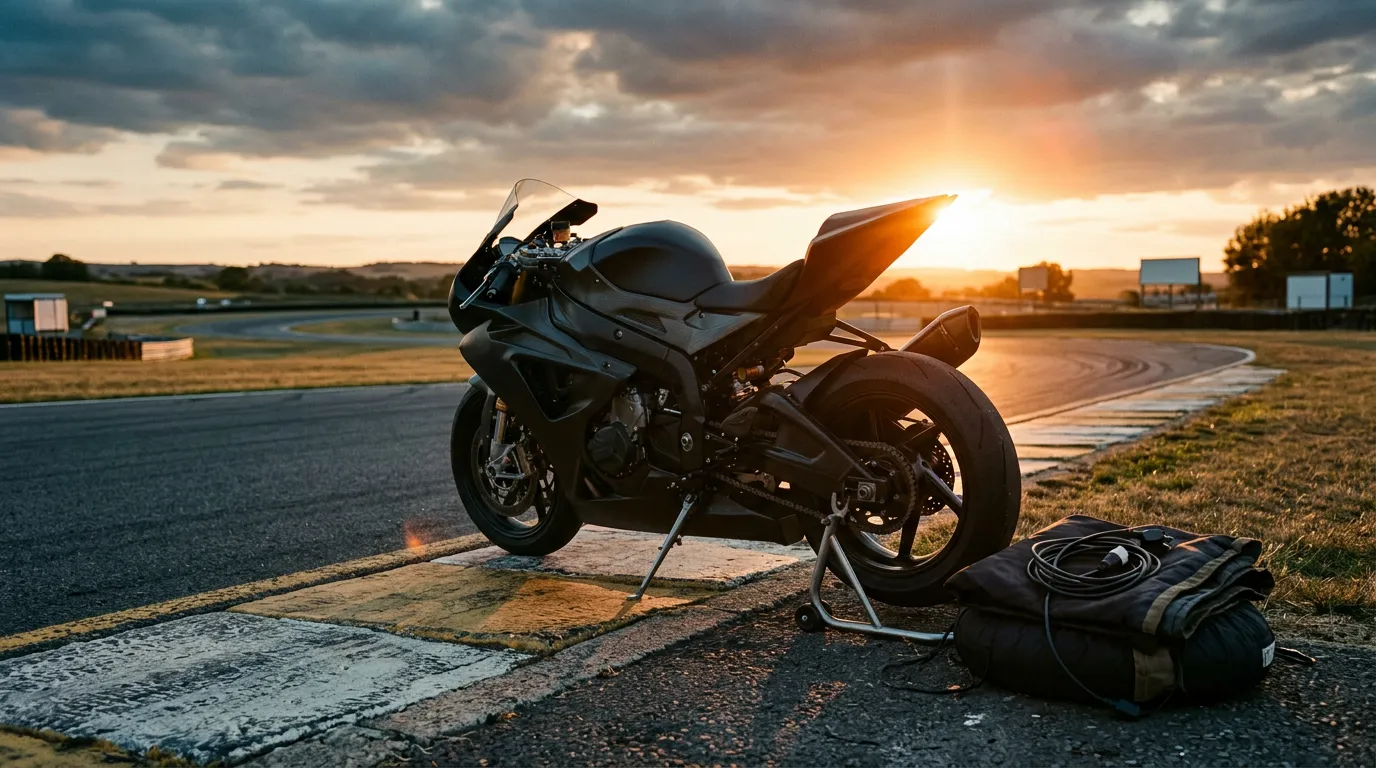
A sportbike is built around one number: the lap time. The tuck, the fairing, the wing: all of it is there to make that number smaller. The trouble with most sportbike posters is that they're manufacturer marketing shots in a livery that dates within two seasons.
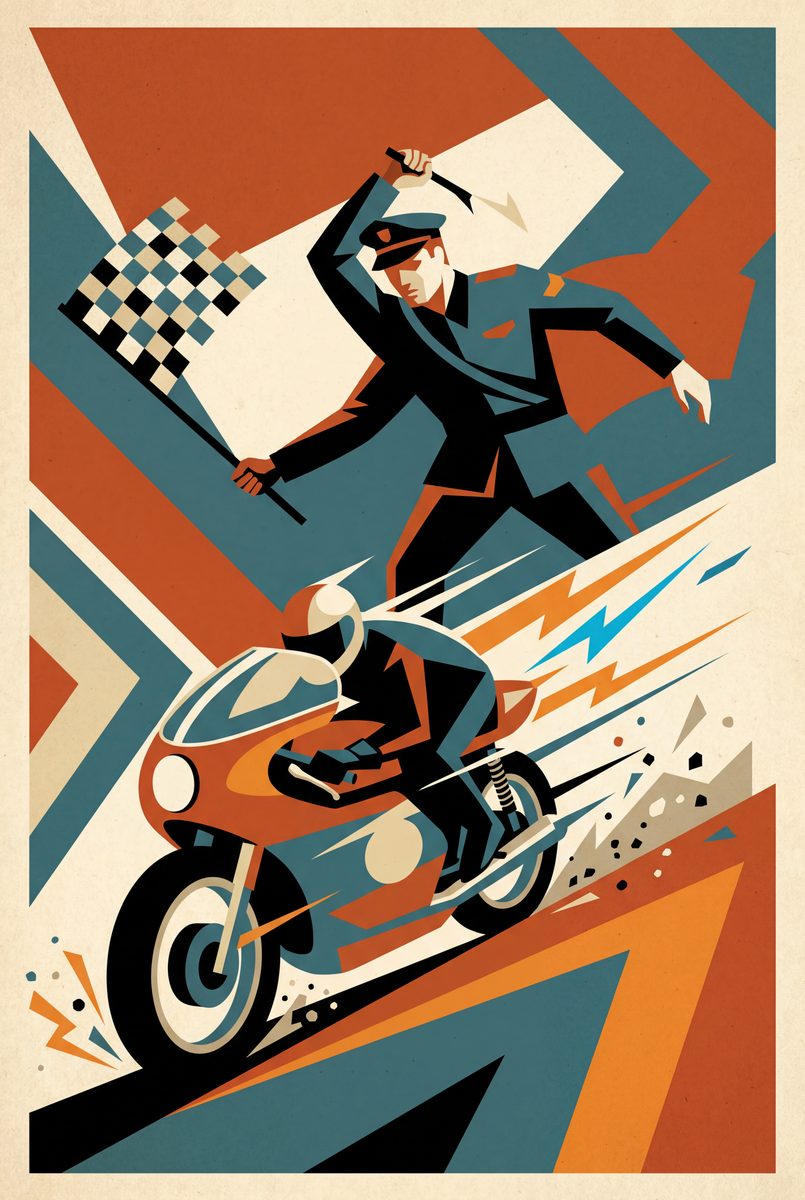
For the rider who likes race lines, a race start as a vintage poster:
Poster · A4, £17.99, free UK delivery
Added. View basket
We take the other route, for a reason that is practical as much as principled. A livery pins a picture to a season and a sponsor, and it stops being current almost immediately. Race-day artwork without one doesn't date, and it carries no one else's branding. Your own bike, shot in good light, never goes out of date in the same way.
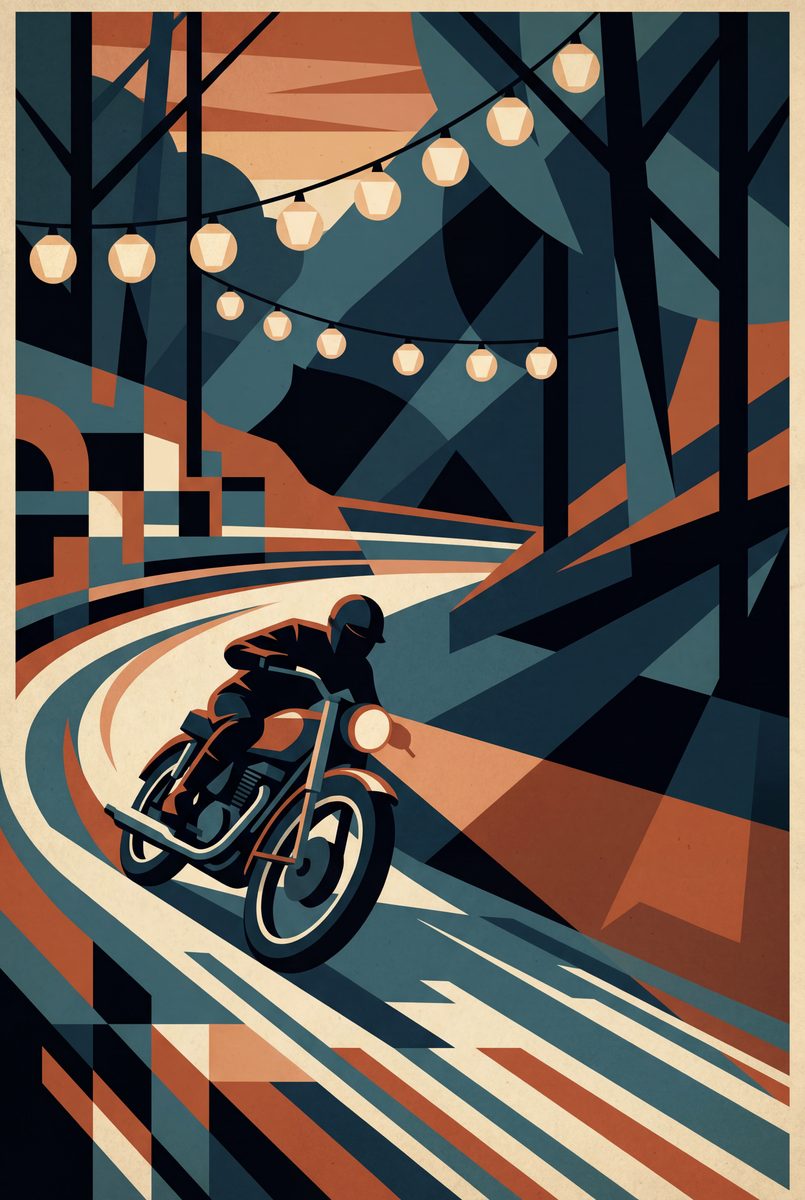
So the race-day series shows the racing itself in vintage poster style: The Sprint at the flag drop, Night Trophy at a dusk corner. And the Paint Shop makes the poster that actually means something, which is your bike, your plate and your tyre wear, as a Garage Oil painting, a Blueprint or a Race Poster of its own, previewed free from one photo.
The bike behind the race replica
A race replica is a road bike built in the image of a racer, and a lot of what we now think of as a sportbike traces back to one of them. Suzuki's own page for the GSX-R750 says the company "revolutionized the sportbike category in 1985 with the introduction of the original GSX-R750". WebBikeWorld's history of the bike says it reached dealers for the 1985 model year and calls it the bike that invented the race replica.
Weight was the target. WebBikeWorld credits chief engineer Etsuo Yokouchi with the approach: strip the weight out first and let the performance follow. He tried it first on the 1983 RG250 Gamma, a two-stroke race replica sold mostly in Japan and Europe, and then on the GSX-R400, sold only in Japan, a year later.
That lightness is why a sportbike looks the way it does: the body is tight, the rider tucks in behind the fairing, and every panel is there to keep air moving.
Choosing the art
Race-day posters with no livery are the safe choice, and they stay current. For the track-day rider, nothing beats a poster of their own bike with their own plate. A paddock photo works better than a posed one because the bike is shown in its element. Speed Sketch, all charcoal and motion lines, suits a shot taken on track.
Choose a size that matches the room. A big poster over a desk works, and a smaller framed pair in a hallway is easier to live with. Pop Print, with its halftone dots and electric colour, is the loud option for a games room. Garage Noir, in black and white, makes a dark fairing look sharp, and Blueprint suits the rider who knows every torque setting on the bike.
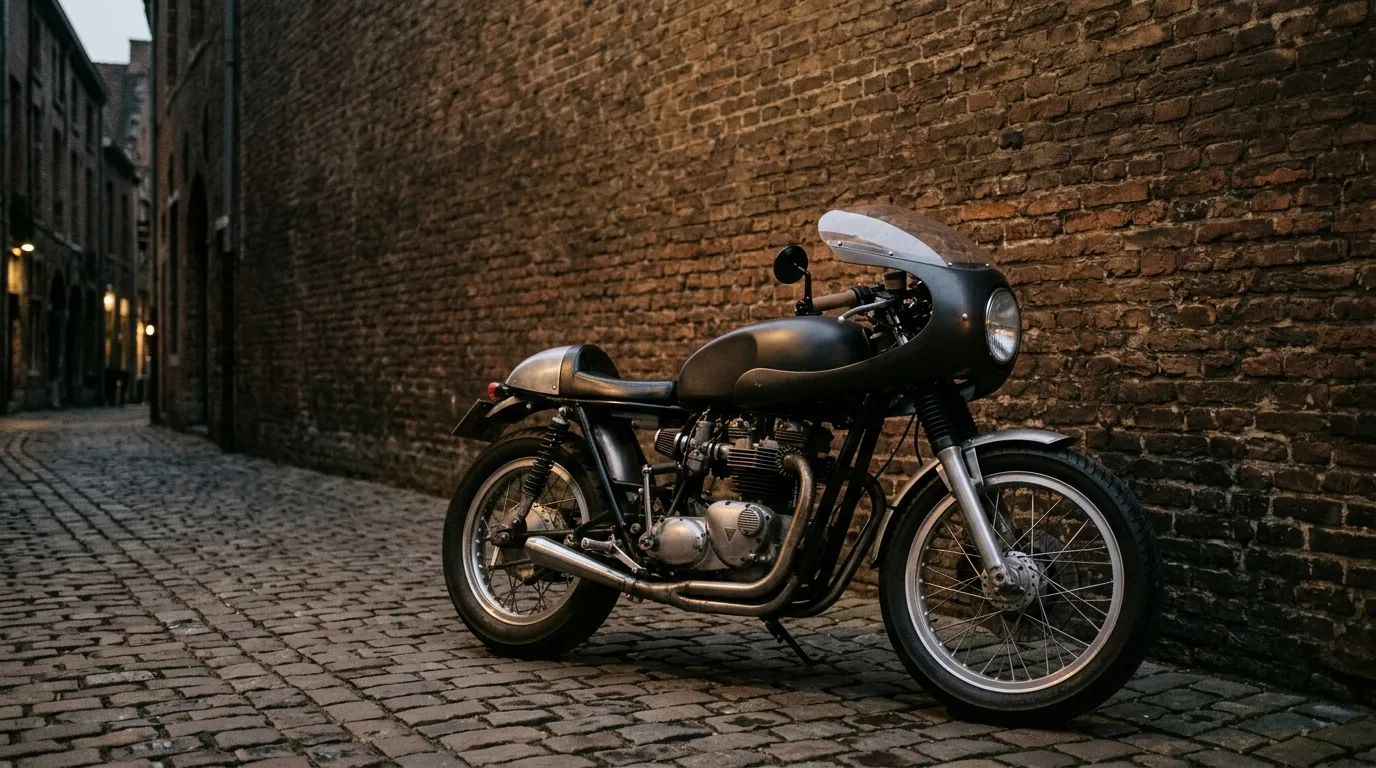
Track-day riders: a paddock shot works well, and the photo guide explains why. Related: classic race machinery, and the cafe racer, which was the original road-going answer to the same question. What is a superbike covers the word.
Questions answered
Do you sell posters of specific superbikes?
No - we do not reproduce manufacturer designs or race liveries. We print race art, and the Paint Shop turns YOUR bike into the poster instead.
What photo works best for a sportbike?
A three-quarter front shot from low down - knee-height - with the whole bike in frame. The photo guide covers it in two minutes.
Other bike styles
Keep reading
- Next Dirt bike
Motocross gives an artist more to work with than almost anything else on two wheels: whips over table-tops, roost off a berm, mud as confetti. Most of what gets sold as dirt bike art, though, is dated stock photography of pros whose numbers mean nothing to the kid on the wall below them.
Also in your bike
All 13 in your bike