What happens on a CBT test, and what comes after it
Most people call it the CBT test. Strictly, compulsory basic training is a course, and GOV.UK puts it plainly: "CBT is not a test that you pass or fail." You ride with a trainer until they're happy you can ride safely on your own, then you get a certificate that lets you ride on L plates while you learn for the real tests.
Jump to a section · 7 sections
What the certificate lets you ride
First you need a provisional licence for the bike you want to learn on. Then, with CBT done, GOV.UK says you can ride a moped from 16, or a motorcycle up to 125cc with a power output of up to 11kW from 17. Both come with L plates (L or D plates in Wales). If the cc figure on an advert is new to you, that page explains what it measures.
The certificate is a learner's permit with a clock on it. You have 2 years to pass your full moped or motorcycle test, or you take CBT again or stop riding. Riding without a valid certificate can mean a fine of up to £1,000 and up to 6 penalty points.
Learning on your own bike? It needs a valid V5C log book, tax and an MOT if it's old enough to need one, and you need proper insurance, as GOV.UK's riding guide sets out.
Before the day
You book directly with a motorcycle training school. The school sets the price, and it depends on where you train and if you bring your own bike. GOV.UK's test costs page gives no figure for CBT for that reason, so we don't either.
Read up first. Your trainer can stop the course if your knowledge of The Highway Code and traffic signs isn't good enough to ride safely, and you can be charged again to retake it.
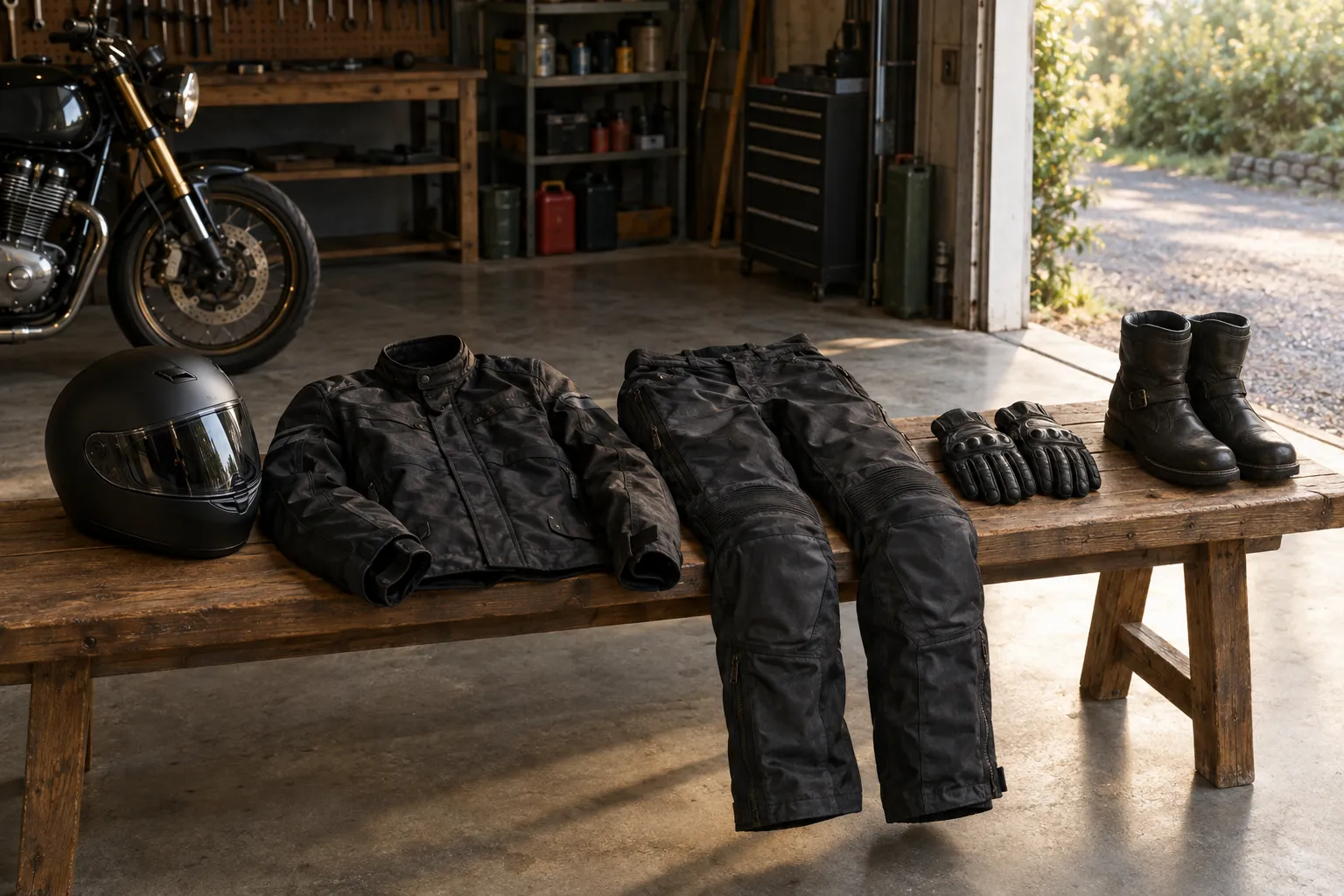
Take your UK driving licence. GOV.UK says what you must wear: a helmet that meets British safety standards (unless you're Sikh and wearing a turban), boots or sturdy footwear that protects your ankles, motorcycle trousers or heavy denim, a motorcycle jacket or a heavy denim one with several layers underneath, and motorcycle gloves. Ask whether the school lends helmets. And don't ride your own bike there unless you already hold a CBT certificate.
The five parts of the day
The course usually takes a full day, longer if you need it. You move from one part to the next when your trainer is happy you've learnt the theory and shown the skills to a safe basic level. DVSA's CBT syllabus calls the parts elements A to E:
- Introduction and eyesight check. What CBT is for, choosing the right kit, and meeting the eyesight rules.
- On-site training. How the bike works, the checks it needs, and getting a feel for its weight and balance.
- On-site riding. Moving off, braking, changing gear and looking around you, away from traffic.
- On-road training. The legal side of riding, where to sit in the road, gaps, speed, and reading what other people are about to do.
- On-road riding. Real traffic: lights, roundabouts, junctions, crossings, hills and bends, plus a U-turn and an emergency stop.
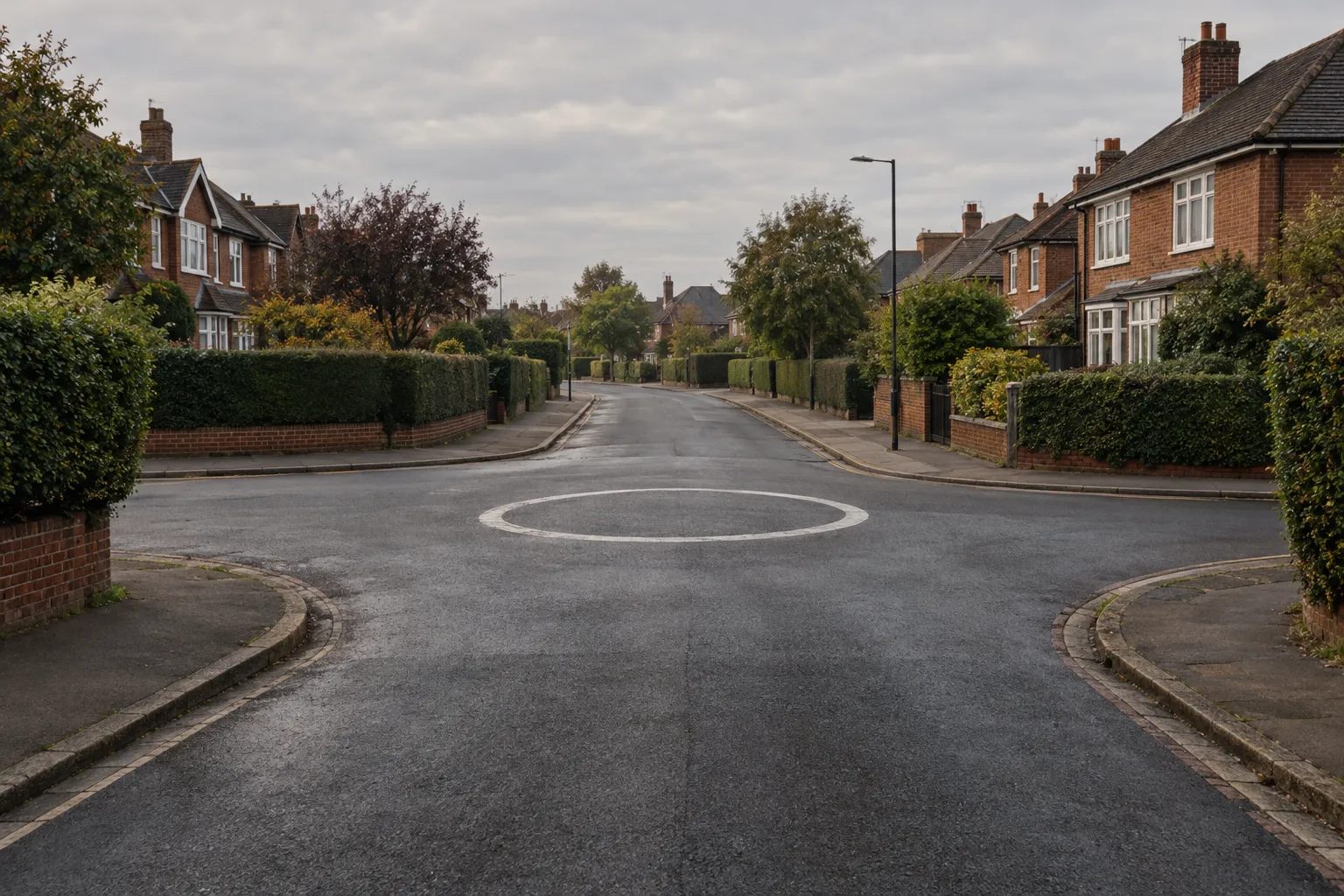
Two rules protect you on the day. The on-road ride must last at least 2 hours. And a trainer can take no more than 4 learners on site and no more than 2 on the road. If either is broken, you can complain.
The certificate, and how long it lasts
Finish and you get a certificate of completion, sometimes called a DL196. It covers you for 2 years. Lose it and the school that trained you can replace it for up to £20 , as long as you did the course within the last 2 years. Past that, you take CBT again.
The rules may change. DVSA ran a consultation from January to May 2026 on, among other things, how long CBT certificates last and a theory test before or during the course. When we checked on 20 November 2026 it was closed with no outcome published, so everything on this page is the rule as it stands.
What comes after CBT
To lose the L plates you pass three things, in order: the theory test, then an off-road riding test called module 1, then an on-road test called module 2. You must pass module 1 before you take module 2, and both within 2 years of the theory test. These are the fees for booking through GOV.UK:
| Test | Weekdays | Evenings, weekends and bank holidays |
|---|---|---|
| Theory test | £23 | £23 |
| Module 1 (off-road) | £15.50 | £15.50 |
| Module 2 (on-road) | £75 | £88.50 |
Source: GOV.UK driving test costs. Which licence you end up with depends on your age and the bike you test on:
| Licence | Bikes it covers | Minimum age |
|---|---|---|
| A1 | Light motorcycles up to 125cc and 11kW | 17 |
| A2 | Up to 35kW, power to weight not more than 0.2kW per kg | 19 |
| A | Any size or power | 24, or 21 after 2 years on A2 |
Source: GOV.UK bike categories, ages and licence requirements. Got your eye on a bigger bike for A2? Put its numbers into our power and A2 check before you go and look at it.
If you already drive a car
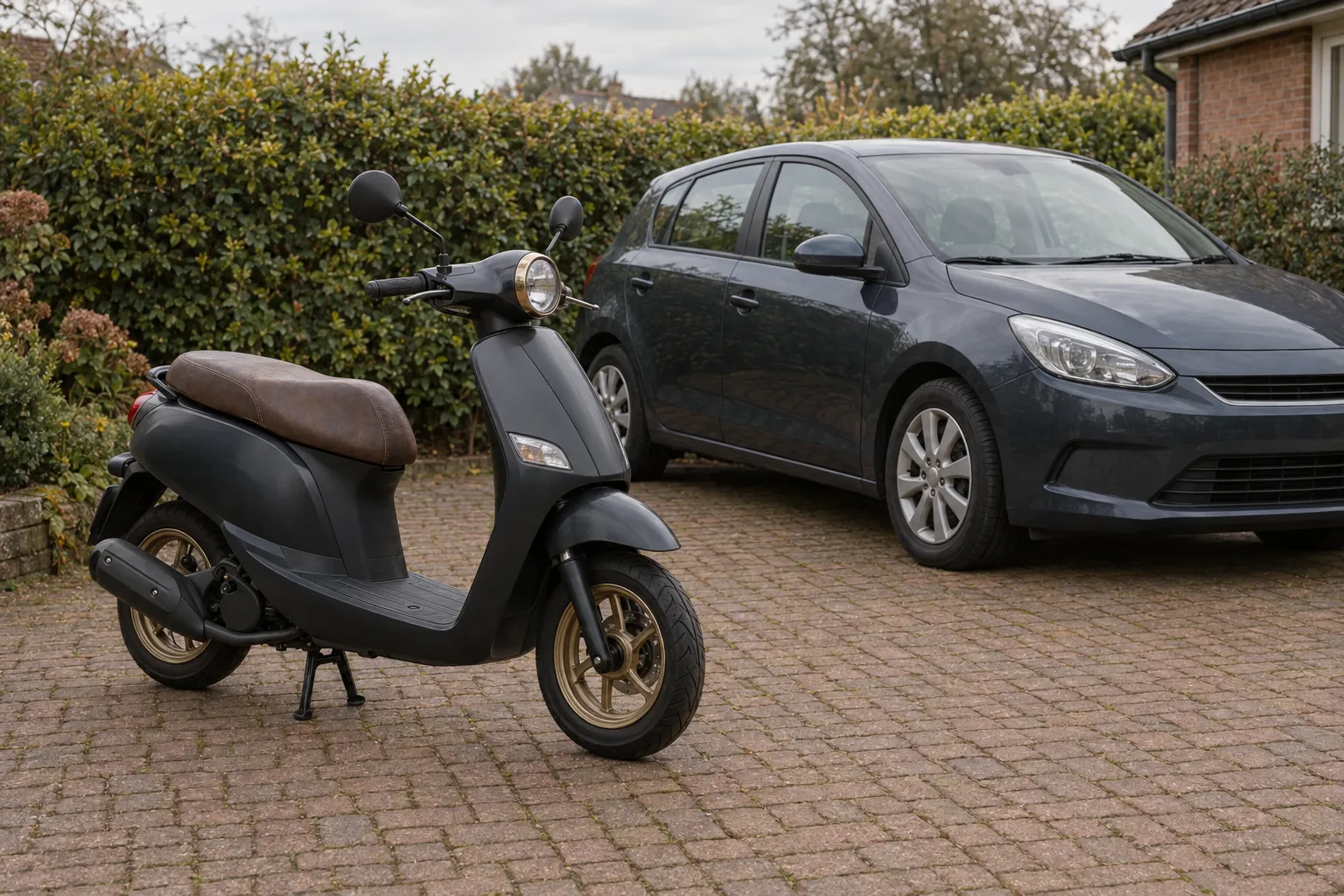
It depends on when you passed. If it was on or after 1 February 2001, CBT plus your car test (in either order, within 2 years of each other) gives you a full moped licence: mopeds up to 50cc, no L plates, no moped test. If you passed before 1 February 2001, you can already ride a 50cc moped without CBT. Anything bigger than that still needs it. The full list of exceptions is on GOV.UK.
If the course falls short
Complain to the training school first, with the trainer's name, the place, the date and what went wrong. If that gets nowhere, complain to DVSA. For a refund, Citizens Advice is the place to start.
Once you're out on the road, the signals riders use in a group are worth learning before your first ride-out, and the great roads page has somewhere worth riding to. When the first bike is yours, one photo of it is all the Paint Shop needs.
This page covers England, Scotland and Wales, where DVSA's syllabus applies. Driving licence categories are different in Northern Ireland, so riders there should read nidirect. Rules quoted from GOV.UK and DVSA pages, checked 20 November 2026.
Written by Craig Fearn, Throttlefolio. Last updated .
Questions answered
Can you fail CBT?
Not the way you fail a test. GOV.UK says CBT "is not a test that you pass or fail". You carry on until your trainer is happy you can ride safely, which can take more than a day. A trainer can stop the course if you aren't ready for it or aren't dressed for it.
How much does CBT cost?
The training school sets the price, and it depends on where you train and if you bring your own bike. GOV.UK publishes no figure. You can find training schools near you on GOV.UK and ask them.
How long does a CBT certificate last?
Two years. Pass your full moped or motorcycle test within that time, or you have to take CBT again or stop riding.
Keep reading
- Next in Your bike How to photograph your bike
To photograph your motorbike well enough to print, you need three things right: the angle, the light, and the background. A phone camera is plenty - the Paint Shop checks resolution before you pay - so this guide is about the two minutes before you press the shutter, not the kit.